New to the Netherlands? Words with a have a short explanation. Tap or click them.
Every country has unwritten rules: things people expect you to do, without anyone telling you. In the Netherlands, most expats find people friendly, helpful and easy to talk to in English. Still, almost everyone has a moment in their first months when something feels strange. A colleague says your plan is "not a good idea" in front of the whole team. A friend plans coffee with you three weeks from now. An invitation to come round turns out to mean one cup of coffee and one biscuit. None of this is meant to be rude. Dutch social life follows a few clear unwritten rules, and once you know them, life gets much easier. This guide explains the customs you will meet at work, with friends, in a Dutch home and in your street.
The idea in simple words
Dutch people value honesty, planning and being equal. They say what they think. They plan their free time in an agenda. They don't like showing off. And everyone pays their own share.
If something a Dutch person does feels rude to you, it is usually one of these values at work. It's almost never meant personally.
The most important facts
- Being direct is being polite: Dutch people say what they think, and expect you to do the same.
- Everything goes in the agenda: plans with friends are often made weeks ahead, and visiting without asking first is rare.
- Everyone pays their own share. Getting a payment request through an app like A popular Dutch app for sending payment requests. You tap the link and pay with your bank app. afterwards is completely normal.
- Be on time: for work, appointments and dinners, five minutes late is already late.
- Introduce yourself to your neighbours when you move in. In the Netherlands, the new person goes round.
Directness: why the Dutch say what they think
Dutch directness is the custom expats talk about most. When a Dutch person disagrees, they say so, often without the soft words that English speakers use. "I don't think that will work" means exactly that. It isn't a personal attack. The idea behind it: honesty shows more respect than politeness that wastes everyone's time.
- Feedback is given openly, also to bosses and in meetings. You are expected to give your opinion too, even if you are new or junior.
- "No" means no. If you ask whether someone has time and they say no, you don't need to ask again.
- Praise is small. "Not bad" (niet slecht) is a real compliment, and "fine" (prima) means things are going well.
- Hints don't work. If you need something, ask for it directly. If you say "it would be nice if someone could...", often nobody does it.
Directness has limits. Being blunt about someone's work or a plan is normal. Talking about personal things, such as someone's weight or salary, is not. And Dutch people value being modest as much as being honest. A well-known saying is doe maar normaal, dan doe je al gek genoeg: "just act normal, that's crazy enough". It shows that the Dutch don't like showing off. Talking big about your successes, your car or your income goes down badly.
The agenda rules social life
Dutch people plan their free time as carefully as their work. Friends often make plans two or three weeks ahead. A busy family may suggest a date a month away. It doesn't mean they don't want to see you. It means they take the plan seriously.
- Don't visit without asking first, even close friends. Send a message before you come.
- A plan is a promise. Cancelling at the last minute without a good reason makes you look unreliable.
- Children's playdates (speelafspraakjes) are planned by the parents, with a fixed time to pick up. If your child is still there at dinner time, they will usually be sent home, or asked if they want to stay and eat (mee-eten). Ask the other parents first.
- Holidays are booked early. Many colleagues plan their summer holiday in January. So ask your team early if you want popular weeks off.
Greetings and introductions
- Meeting someone new: a firm handshake, look them in the eye, and say your name. Many Dutch people just say their first name, or their first and last name, as they shake your hand.
- Friends and family: traditionally three kisses on the cheeks, left, right, left. Since the pandemic, many people only hug or wave. Follow what the other person does.
- First names are normal at work, also with your boss. Dutch has two words for "you": the polite u and the friendly je. With older people, officials and doctors, use u until they suggest je.
- On the phone, Dutch people answer with their name: "Met Sanne" ("Sanne speaking").
- At a birthday party, you congratulate everyone in the room, not only the person having the birthday. Our guide to Dutch holidays and traditions explains the famous circle party.
Money: going Dutch and tipping
Splitting the bill (ieder betaalt voor zich, "everyone pays for themselves") is normal among friends, among colleagues and on dates. Often one person pays, and afterwards sends everyone a payment request through a bank app or Tikkie. Paying it quickly is part of good manners, even if it's only a few euros. If someone says they are treating you (ik trakteer), you can treat them next time.
Tipping is not expected the way it is in the United States, because service is included in the price. In restaurants, many people round up or leave about 5 to 10% for good service. In cafés, people often just round up. Taxi drivers and hairdressers don't expect a tip.
Visiting a Dutch home
Being invited into someone's home is a sign of real friendship. Look carefully at what you are invited for:
| Invitation | What to expect |
|---|---|
| Coffee (koffie), often around 10:00 or 20:00 | Coffee or tea with a biscuit or a slice of cake. Not a meal. |
| Drinks (borrel), often from 17:00 | Wine or beer with snacks such as cheese, sausage and Small fried balls with a creamy meat filling, a favourite Dutch snack with drinks. Let them cool down: they are very hot inside.. You'll probably still need dinner afterwards. |
| Dinner (eten), usually around 18:00 | A full meal. Dutch people eat earlier than most Europeans, so don't arrive at 20:00. |
- Arrive on time, or send a message if you are late.
- Bring something small: flowers, a bottle of wine or chocolates. Giving money or something expensive feels awkward.
- Shoes: in most Dutch homes you keep them on, but more and more people ask guests to take them off. If you see a row of shoes by the door, do the same.
- Don't expect to stay all night, especially on a weekday. Leaving around 22:00 or 23:00 is normal.
You may also notice that many Dutch living rooms have no curtains, or curtains that stay open in the evening. People often say it's a habit of having nothing to hide. It's fine to look as you walk past, but staring is rude.
Neighbours and your street
- Introduce yourself when you move in. In the Netherlands, the new person rings the neighbours' doorbells, sometimes with a small treat. It makes it much easier to ask for help later.
- Having a party? Put a note through your neighbours' letterboxes a few days before, saying when it starts and ends. Most people won't complain about one noisy evening if they know about it.
- Quiet hours: in apartments, keep the noise down after about 22:00 and on Sunday mornings. Sound travels easily through Dutch floors.
- Neighbourhood apps: many streets have a WhatsApp group (buurtapp) for safety warnings, lost cats and borrowing ladders. Ask your neighbours to add you.
- Letterbox stickers: a NEE/NEE sticker ("no/no") means no advertising and no free local newspapers. With NEE/JA ("no/yes") you still get the local paper.
- Rubbish and recycling: put your bins outside only on collection day. Sort paper, glass and other waste the way your The local government of your town or city. In Dutch: gemeente. It collects the rubbish. asks. Leaving rubbish next to a full container can get you a fine.
At work
- Bosses are equal, not above you: managers are easy to talk to, and everyone is expected to give their view. Decisions are often made together after long talks, until most people agree. The Dutch call this the The Dutch habit of making decisions by talking until everyone can agree. Named after the polders, low land that people had to work together to keep dry..
- Meetings start on time and usually end on time too.
- Lunch is quick: often a sandwich (boterham) with cheese, a glass of milk or buttermilk, and back to work within half an hour. A long lunch out is unusual.
- Working hours are respected. Leaving on time to pick up your children is normal, and so is working part-time. Many parents have a fixed day off with their children, often called papadag or mamadag ("daddy day" or "mummy day").
- Treats: on your birthday, or when you come back from holiday, you bring cake or sweets for your team.
- Friday drinks (vrijdagmiddagborrel) are the easiest way to get to know your colleagues outside meetings.
Questions about your salary or contract? Our guides to salaries in the Netherlands and your Dutch payslip explain how Dutch pay works.
On the street and on the bike
- Don't walk on the bike lanes. Red asphalt usually means a bike lane, and cyclists won't always stop for you.
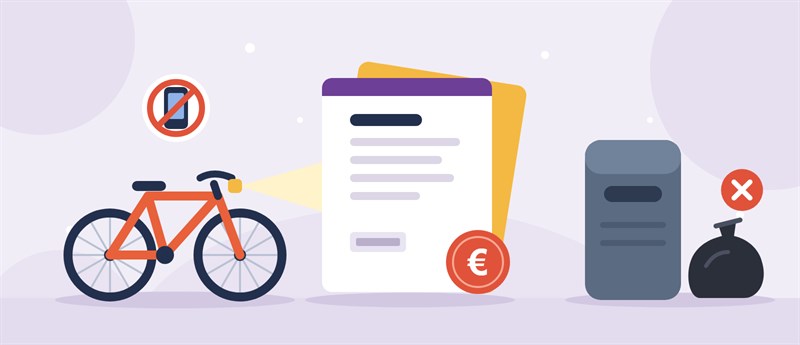
- Use your bell as a friendly warning, show with your hand before you turn, and use lights when it's dark. Cycling without lights can get you a fine.
- Queues are loose. At the bakery, the market or the pharmacy, take a number if there is a ticket machine. If not, remember who was there before you, because nobody will tell you it's your turn.
When Dutch people switch to English
As soon as you try your first sentence in Dutch, many people answer in English. They mean to help, not to say your Dutch is bad. If you want to practise, just say so: "Ik wil graag mijn Nederlands oefenen" ("I'd like to practise my Dutch"). Most people will happily switch back. Even a few Dutch words, such as dank je wel (thank you) and lekker (tasty, nice), make a good impression.
Gezellig: the word you'll hear most
If you learn one Dutch word first, make it gezellig. It describes anything cosy, friendly and nice: a dinner with friends, a café with candles, a birthday party, even a good chat with a colleague. Saying something was gezellig is the best compliment you can give a host. You'll find that Dutch people, who seem so practical and direct at work, put a lot of effort into making time together gezellig.
Your social customs checklist
- Introduce yourself to your neighbours in your first week.
- Keep an agenda on your phone, and expect to plan time with friends a few weeks ahead.
- Install Tikkie, or check that your bank app can send payment requests. Pay requests from friends quickly.
- Check what an invitation is for: coffee, drinks or dinner.
- Give your opinion at work, and don't take direct feedback personally.
- Learn a few Dutch phrases, and ask people to speak Dutch with you if you want to practise.
This is general information. Customs are different between regions, cities and age groups, and between people. What's normal in Amsterdam may be different in a village in Limburg or Friesland. When you're not sure, watch what others do, or just ask. Dutch people won't mind a direct question.